Our mentor, Frances Conteh, writes about their projects with students at Charles Dickens Primary School during 2024–25.
“Hand of Fatima”
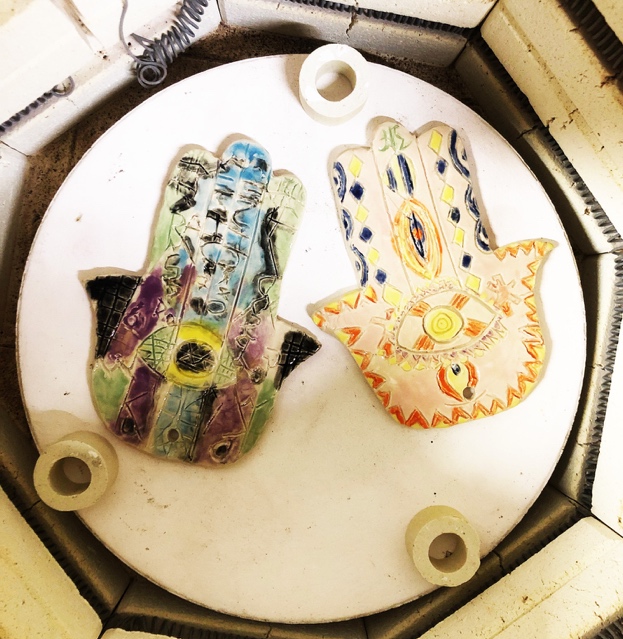
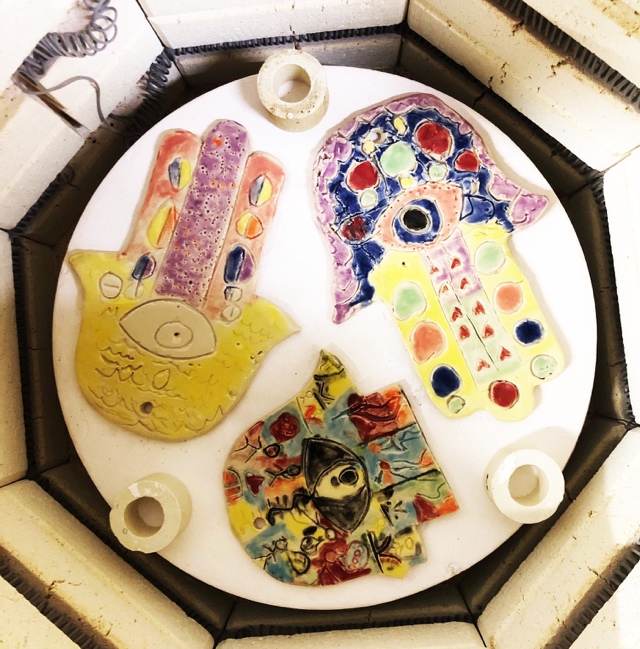
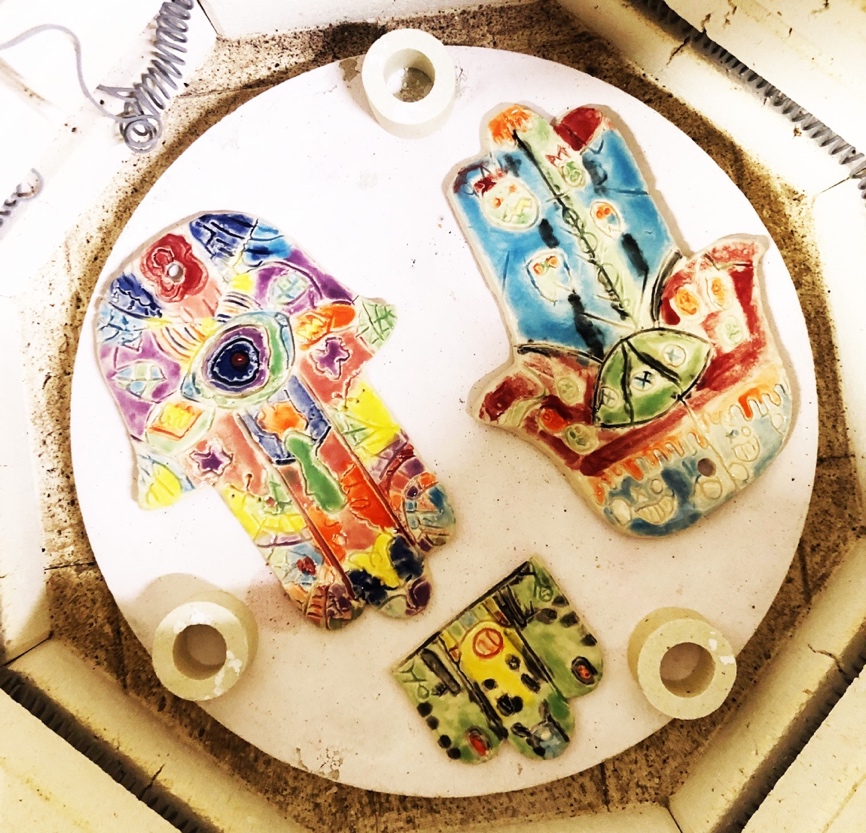
In September 2024, I introduced a clay project inspired by the Hand of Fatima (Hamsa)—a symbol of happiness and good fortune. Students explored drawing and pattern-making, then created personal ceramic amulets reflecting what makes them happy. The tactile nature of clay made this project especially engaging, and students were delighted with their colourful, glazed pieces.
Hand of Fatima worksheets:
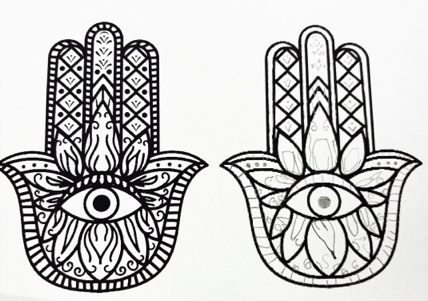
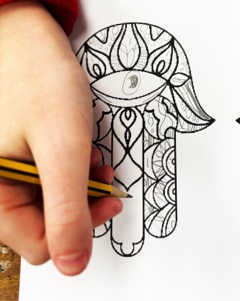
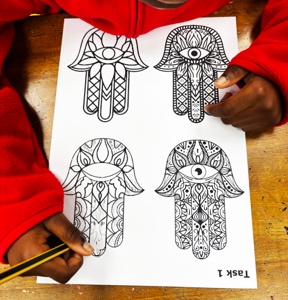
Once the group had developed their design ideas, they cut out their clay Hamsa hands by tracing around a cardboard template placed on rolled-out clay slabs. Using a variety of tools, they then imprinted their designs into the clay, adding detail and texture.
Hand Pencil Drawings/What Makes Students Happy:
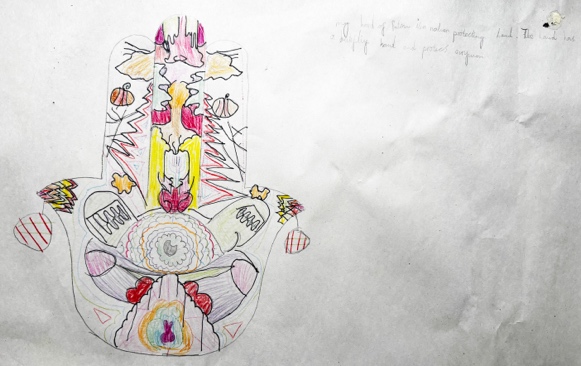
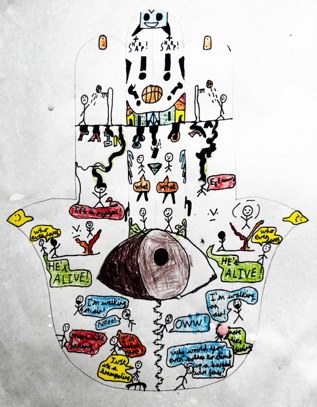
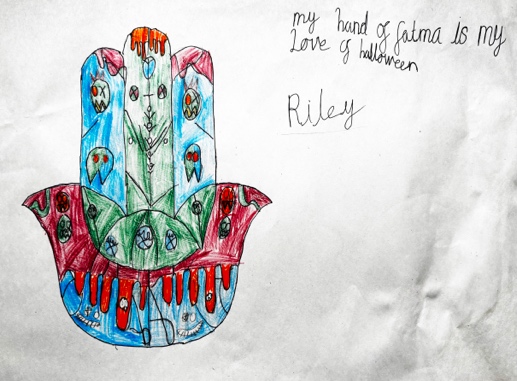
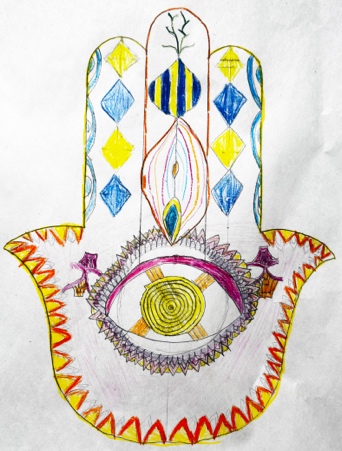
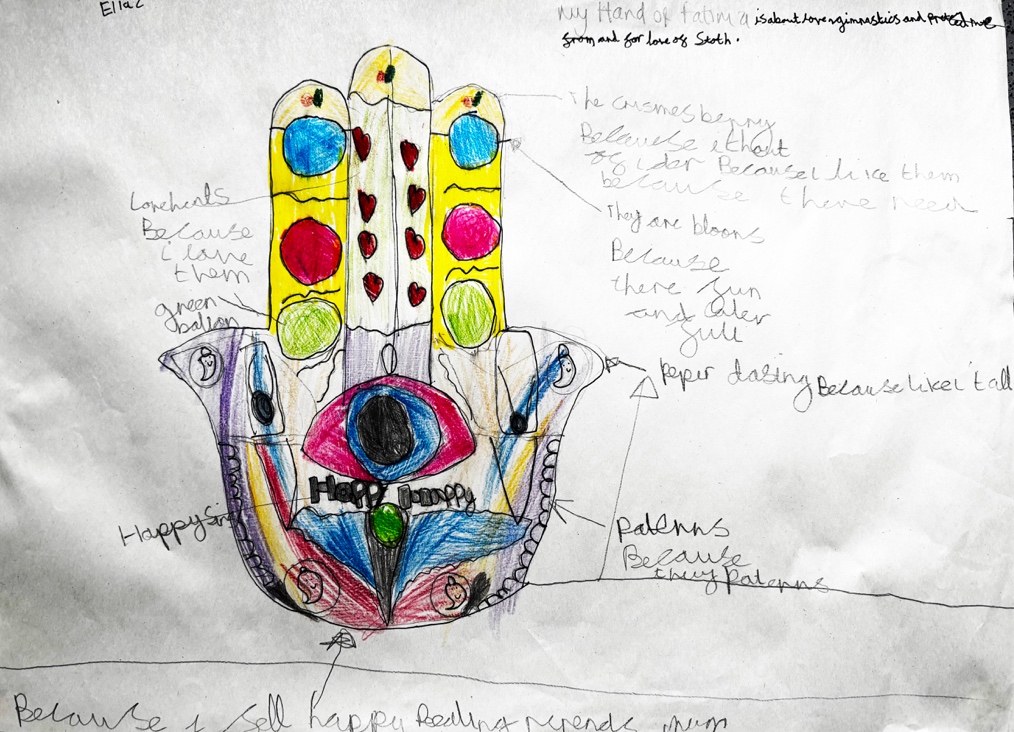
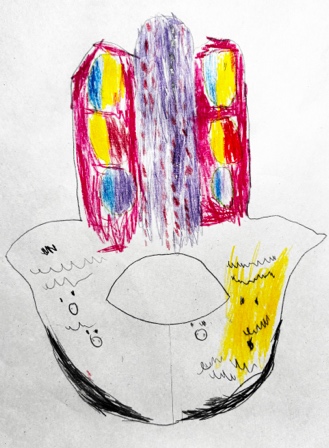
I noticed that the students responded very positively to this project, most likely because working with clay is such a tactile and malleable experience.
After the initial bisque firing, the students painted their pieces using coloured underglazes to bring out bright tones and details. The Hamsa designs were then fired again, and the students were pleased with their project outcome.
Ceramic Hand of Fatima:
Patterns
This term, my groups began “Shapes & Colours: Crafting Geometric Pattern Designs”, exploring geometric patterns through collage and print. Students identified everyday shapes, created group table patterns using templates, and developed individual compositions through collage and marker drawings. As an extension, they produced half-drop repeat prints, learning how to create continuous designs through rearrangement and replication.
Research Drawings:
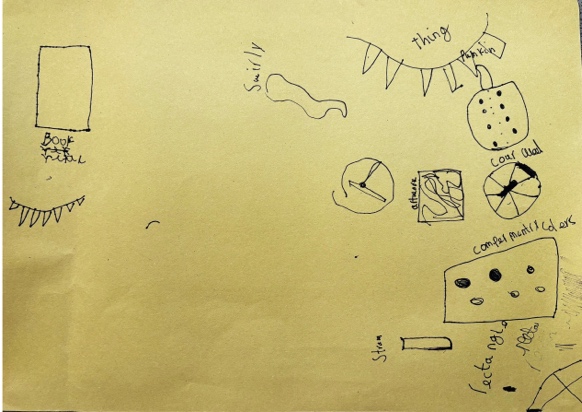
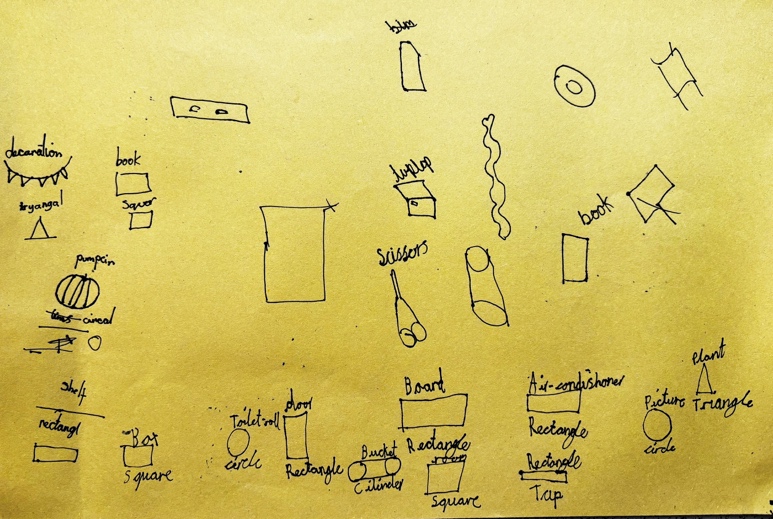
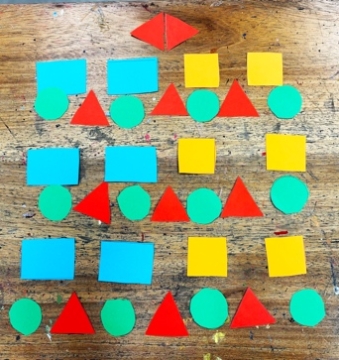
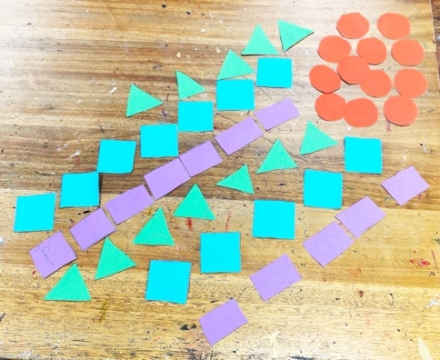
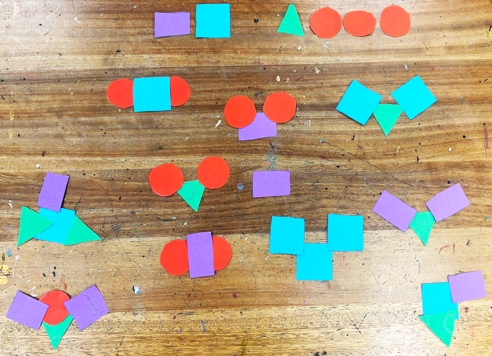
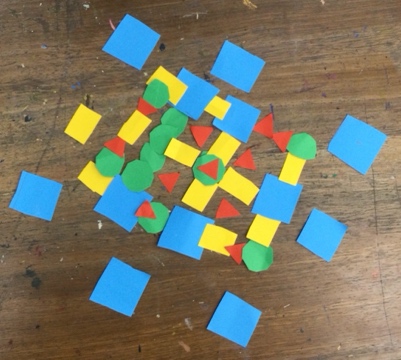
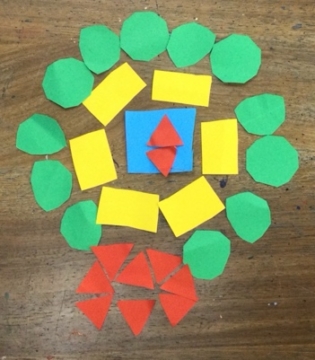
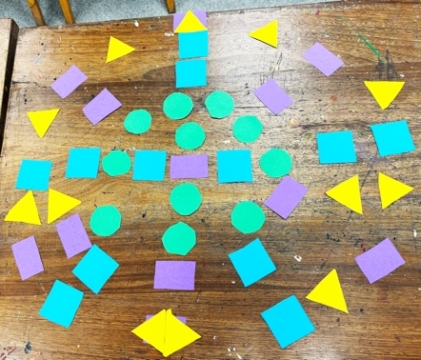
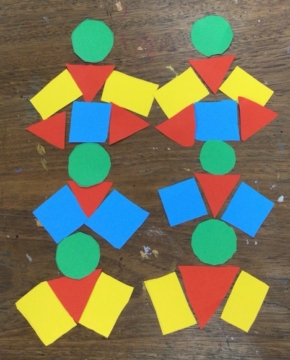
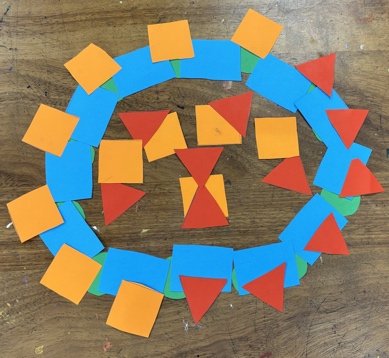
Geometric Table Pattern Designs (circular, diagonal, vertical, and overlapping patterns):
The group used geometric templates to draw and cut out a range of basic shapes – squares, circles, rectangles, and triangles. They then explored geometric patternmaking. I gave them action words to guide how they arranged the shapes on the table, creating vertical and horizontal lines, circular formations and other layouts. It was great to see how each student interpreted the same instructions in their own way, resulting in a variety of unique patterns through a group hands-on activity.
Collage Pattern Making:
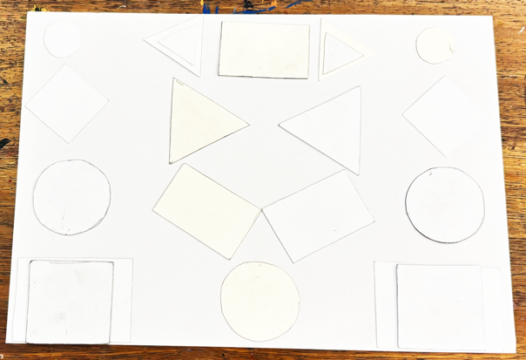
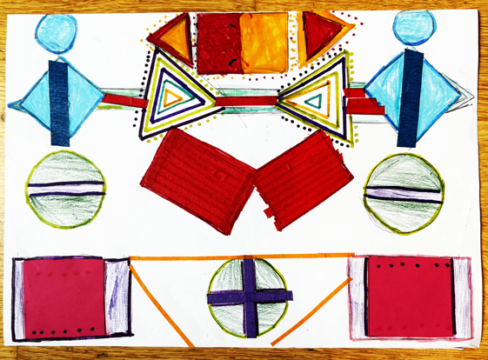
The students were encouraged to take their patternmaking further by placing geometric templates onto A4 paper to explore composition and scale. They traced around their shapes, then had the option to add colour and build collage using coloured paper and tape. To push their creativity even more, they were invited to be expressive with pattern and colour using marker pens.
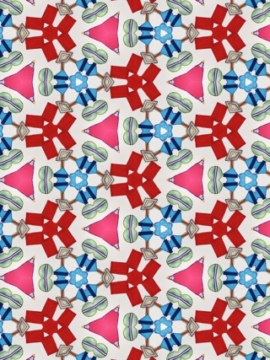
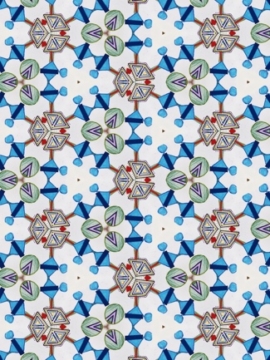
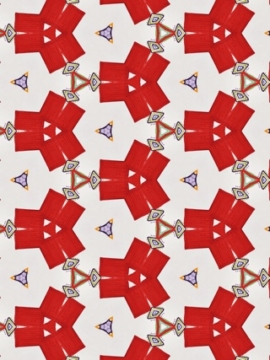
KaleidaCam App:
The design process was explored further with a KaleidaCam App. The students individually took kaleidoscopic photos of their collage/drawing designs using the different pattern styles and effects to capture visually engaging abstract pattern.
Half Drop Repeat Print:
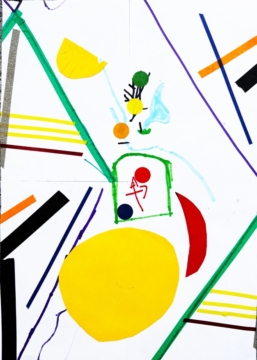
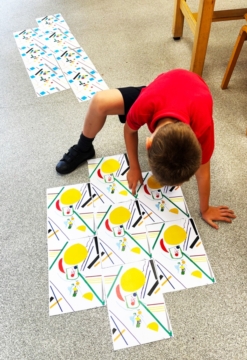
As an extension project, students explored the half-drop print technique. The group began by creating abstract collage designs incorporated with drawing. The work was cut into 3 sections, re-arranged and areas redrawn or collaged with added details. The designs were then photocopied multiple times. Using the repeated copies, each student assembled a large-scale pattern by arranging them in a half-drop layout to form a continuous repeat design.
Students Observations and Feedback:
A Year 6 parent noted that the sessions help regulate their child’s emotions and confidence. One student commented, “I like working with you because it’s a break from Maths and English.” Others expressed how much they enjoy 3D work and the freedom to get “messy” with clay.
Small-group sessions have supported focus, creativity, and emotional wellbeing—particularly for students with attendance or behavioural challenges.
Student Feedback:
- “I like working with you because it’s a break from Maths and English”
- “I like to make 3D models”
- “I like working with clay because it’s fun and I like to get messy”
- “You’re a good teacher and you’re helpful and you take responsibility”
- “You’re fun and things are always fun”